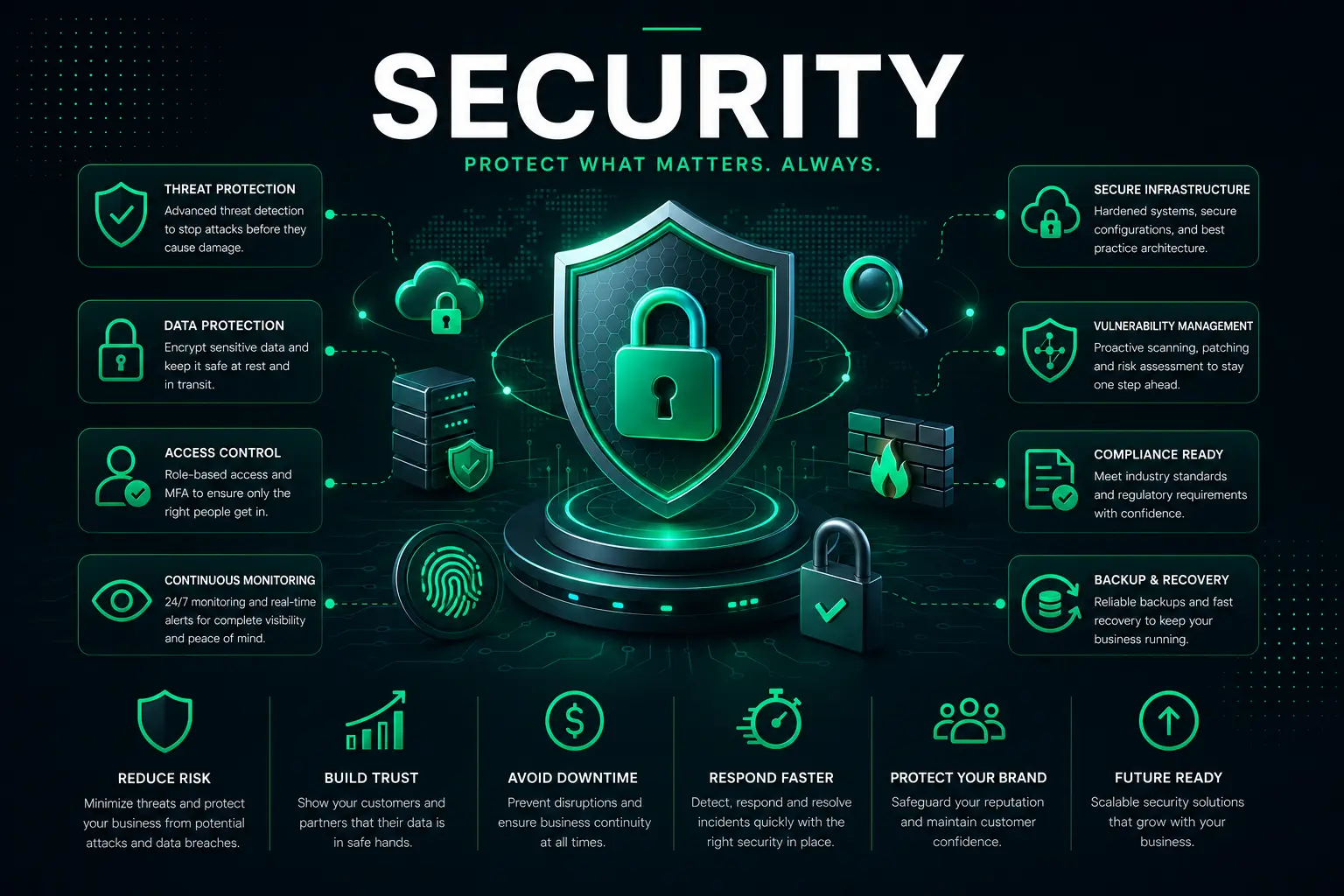
Security is invisible until it isn't
A website can run fine for years with no security maintenance - until it doesn't. A hacked site means lost trust, lost rankings, and customers seeing a browser warning instead of your homepage. Most security failures are preventable with basic maintenance that simply never got scheduled. The fix afterward always costs more than the audit would have.
What changes
Website security audits and malware removal for sites already compromised, paired with the backup systems and disaster recovery that prevent the next incident from becoming a crisis.
What changes - by situation
- Already compromised
- Malware removal and emergency malware removal for sites currently hacked, flagged by Google, or sending spam - prioritised to get the site clean and trusted again as fast as possible.
- Preventive auditing
- Website security and security audits that find vulnerabilities before they're exploited - outdated plugins, weak access points, missing security headers.
- Performance & security combined
- Performance and security audits run together, since a slow, poorly maintained site is usually also a vulnerable one - the same neglect tends to cause both.
- Backup & recovery
- Backup systems and disaster recovery planning that mean a future incident costs hours to fix, not days - because a clean recovery point already exists.